A consistent, step-by-step negotiation process that improves clarity, shortens turnaround times, and keeps every party moving toward a timely decision.
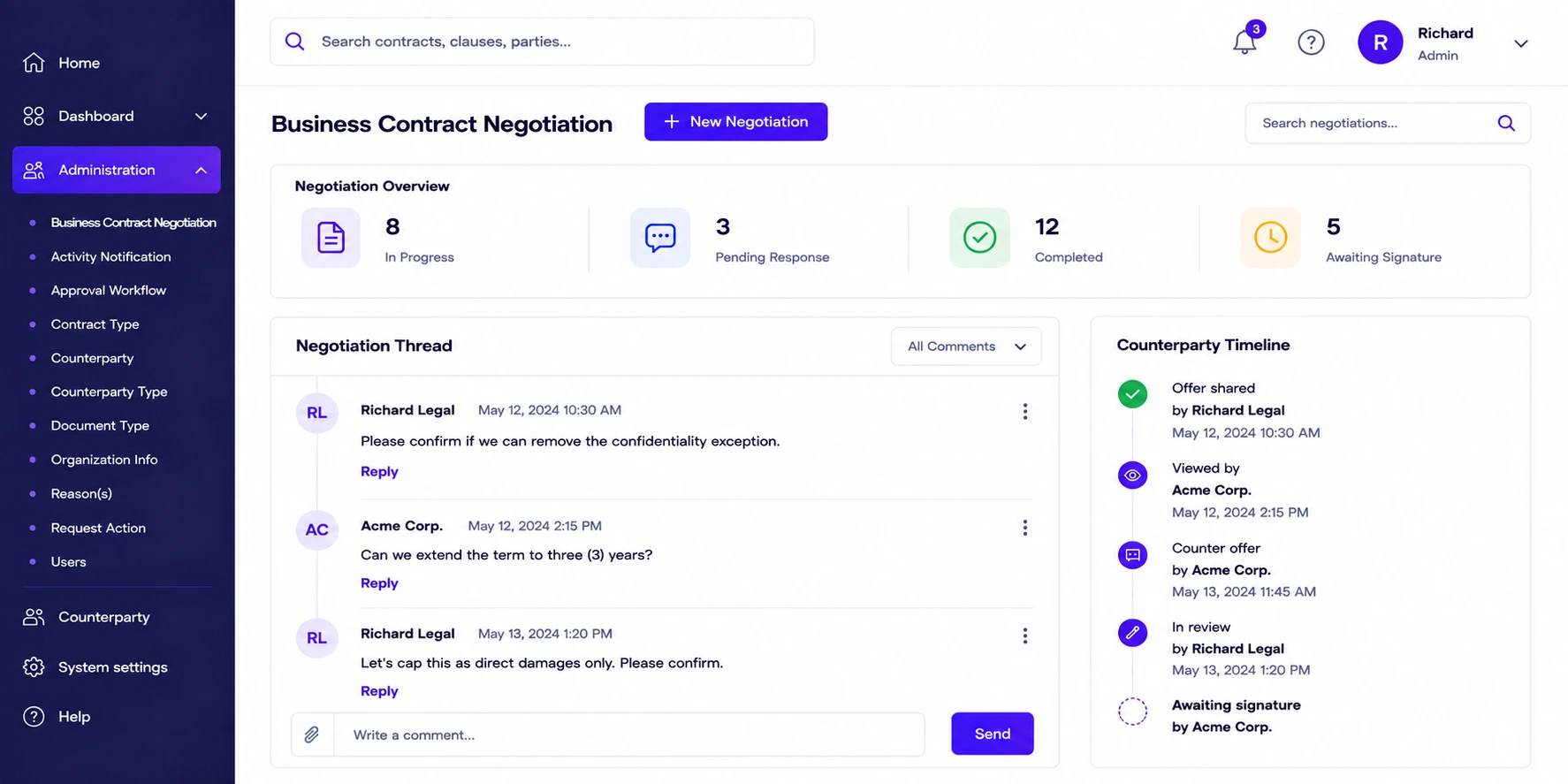
Every negotiation follows the same visible path, so no party is left wondering what happens next or whose turn it is to act.
Negotiations route directly to counterparties, who receive an Outlook notification pointing them to the contract.
Discussion stays systematic and organized, instead of scattered across separate email threads.
A complete record of comments and actions is visible to everyone involved in the negotiation.
Accept requests and remind counterparties to continue their review, so nothing stalls unattended.
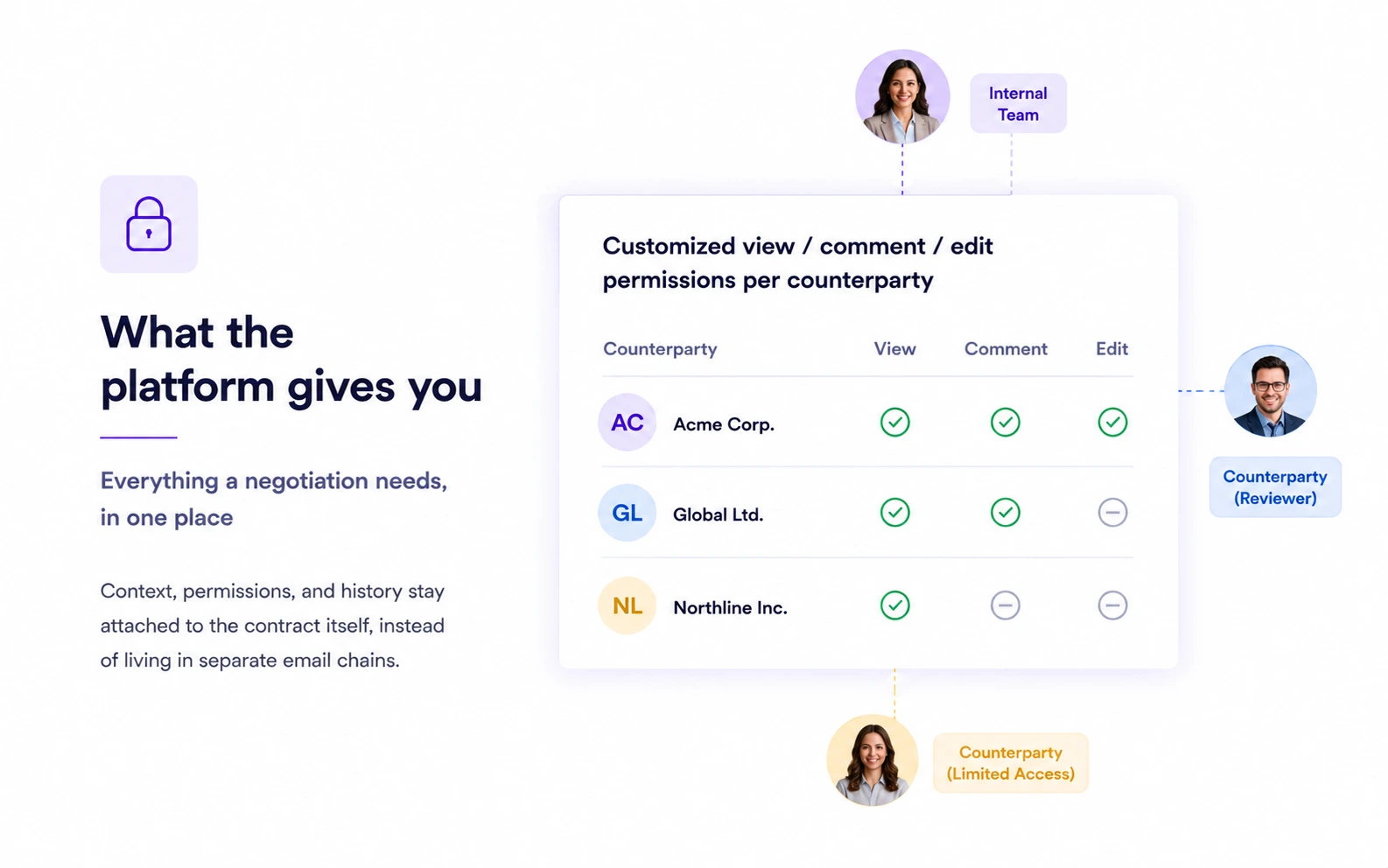
Context, permissions, and history stay attached to the contract itself, instead of living in separate email chains.
Share context before a contract reaches the counterparty, so the first read isn't the first explanation.
Customized permissions define exactly who can view, comment, or edit at each stage.
Collaboration happens through the same inbox counterparties already check.
Proposed changes are discussed and accepted in context, no separate redline document to reconcile.
Shorter negotiation cycles mean projects tied to the agreement can start earlier.
The process exists to protect these four outcomes — not to add steps for their own sake.
Every party sees the same history and current state of the negotiation.
A structured process produces terms that work for both sides, not just whoever pushed hardest.
Less time spent chasing status updates means more time on terms that matter.
Clear next steps at every stage push the negotiation toward a decision.
The four-step platform process sits inside a broader negotiation lifecycle — these are the six phases most negotiations move through.
Set clear objectives before the first exchange.
Open the conversation with a collaborative tone.
Clarify intent before proposing changes.
Work through disagreements jointly.
Capture agreed terms clearly.
Move to signature without losing momentum.
When a negotiation is initiated, counterparties receive an Outlook notification directing them straight to the contract, so there's no delay locating the right document.
Notifications arrive as Outlook links pointing directly to the contract and the pending action, so counterparties can respond without searching for context.
Yes. Commenting is bi-directional, so both sides can leave concise remarks and see the full discussion history in one place.
Prepare objectives, start the dialogue, discuss terms, resolve challenges jointly, finalize and document the agreement, then close and execute the contract.
Business contract negotiation is the structured process of discussing, revising, and agreeing on contract terms between parties until both sides reach a mutually acceptable agreement.
A 30-minute walkthrough of the negotiation process, from initiation to signature.