Dynamic templates with conditional clause logic let business teams self-serve contracts from pre-approved language, while legal keeps full control over what's actually allowed in.
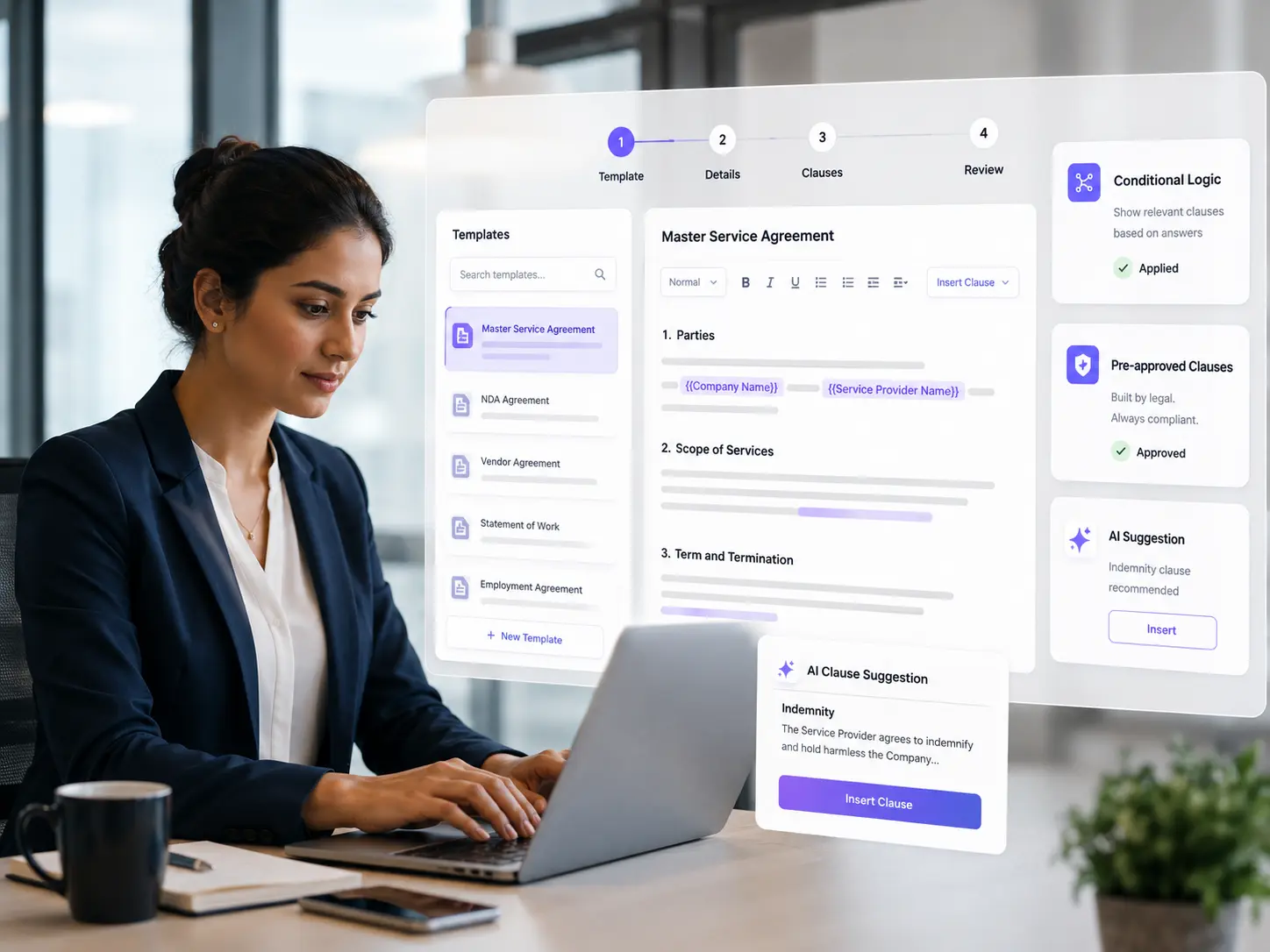
Modern authoring tools apply conditional logic automatically — CLMS 360 brings that same intelligence into templates your business teams can actually use.
Fields auto-populate from deal data, so drafts start pre-filled instead of blank.
Clauses insert or swap automatically based on deal size, jurisdiction, or customer type.
Business teams answer a short form and get a compliant first draft without opening a blank document.
Flag non-compliant clauses, suggest approved language, and draft new clauses on demand.
Every template and clause option is pre-approved by legal. Anything outside standard language routes automatically for review, so speed never comes at the cost of compliance.
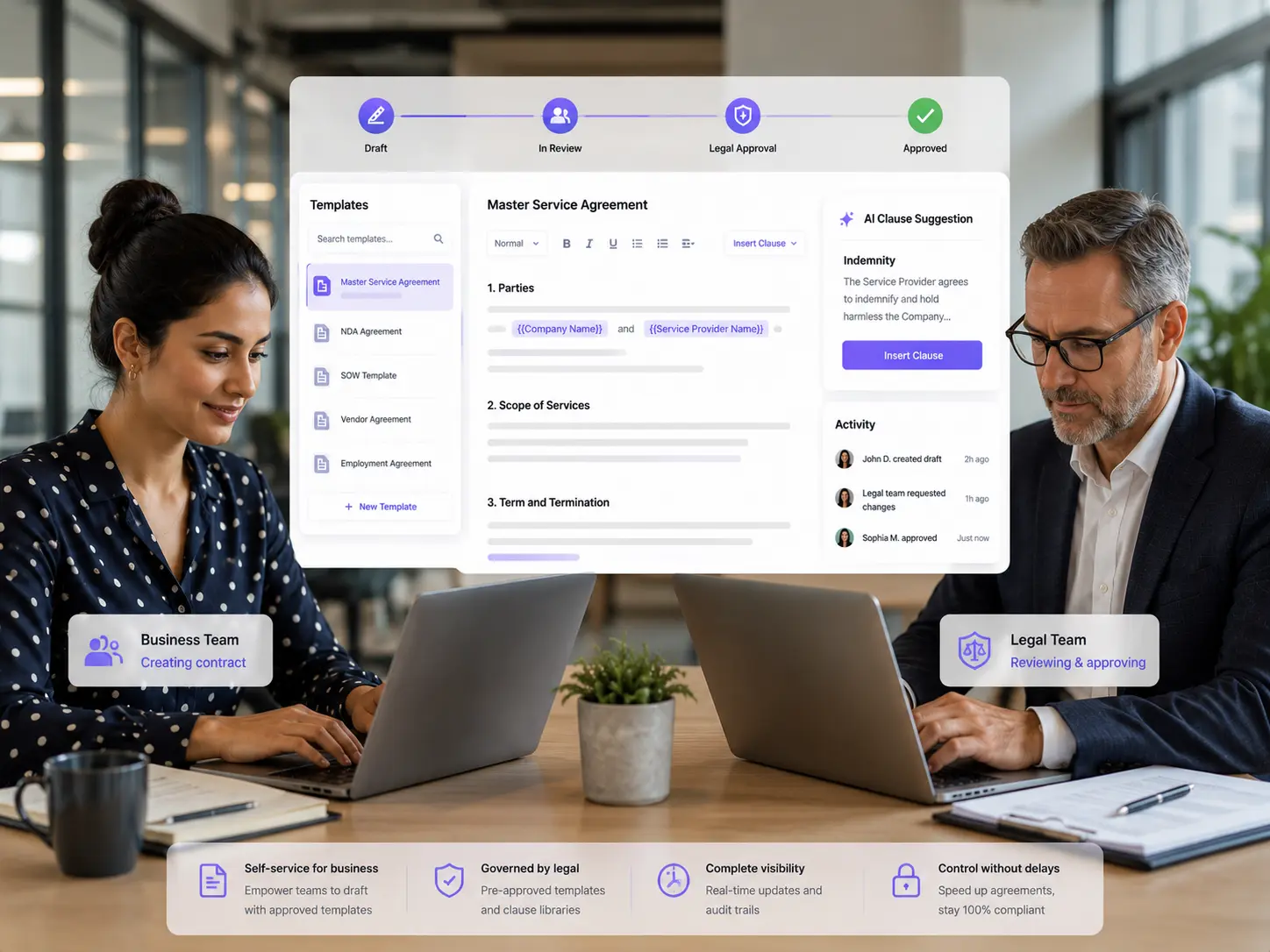
Build separate templates for NDAs, MSAs, vendor agreements, and any other agreement type you use.
Deviations from approved language trigger a review step automatically, no manual flagging required.
Update a master template once and every future draft picks up the change automatically.
The draft knows which approvals it will need before it's even submitted, based on its own content.
When business teams can self-serve a compliant draft, legal's time shifts from repetitive drafting to the negotiations that actually need expertise.
Standard agreements go from hours of drafting to minutes of form-filling.
Every draft starts from pre-approved clauses instead of a rewritten template from last year.
Fewer routine drafts on legal's desk means more time for the negotiations that actually need their expertise.
Sales and procurement stop waiting on legal for standard agreements, keeping deals moving.
Yes. Self-service intake forms populate pre-approved templates with deal-specific data, producing a compliant first draft without legal needing to start from scratch.
Conditional logic automatically inserts or swaps clauses based on deal attributes — for example, adding executive approval language above a certain deal size, or GDPR terms for EU customers.
Templates and clause options are pre-approved by legal, and any deviation from standard language automatically routes for legal review before the contract proceeds.
Yes. Build separate templates for NDAs, MSAs, vendor agreements, or any contract type, each with its own fields and clause logic.
Dynamic templates that auto-populate based on deal parameters typically reduce drafting time from hours to minutes for standard agreement types.
Can business teams draft contracts without involving legal every time?
Yes — self-service intake forms populate pre-approved templates with deal-specific data, producing a compliant first draft.
What is conditional clause logic?
It automatically inserts or swaps clauses based on deal attributes, like deal size or customer jurisdiction.
How does authoring keep legal in control if business users are drafting?
Templates are pre-approved by legal, and any deviation automatically routes for review before the contract proceeds.
A 30-minute walkthrough of dynamic templates, conditional clauses, and self-service authoring inside CLMS 360.